Tampilkan postingan dengan label sandwiches. Tampilkan semua postingan

Rabu, 27 Agustus 2014

Fig and mascarpone bruschetta

Some things don’t need introductions. They are as simple as they can be yet still incredibly beautiful and satisfying.


When figs are ripe and sweet, mascarpone is creamy and ham is salty, then what more do you need than a slice of good, crusty bread, some runny honey with floral notes, a few sprigs of earthy, fresh thyme, and a drizzle of extra virgin olive oil?


A quick recipe for bruschette that you can make as an appetizer or serve as a nibble with a chilled glass of wine or a cold beer on a warm, late-summer evening.


One of the tastiest bruschette there is.

Hope you enjoy!


Fig and mascarpone bruschetta with ham and honey

Use any kind of cured, boiled or smoked ham of which the taste you enjoy.
Instead of mascarpone you can also use cream cheese, or for a different flavor profile and if you like its tangy and sharp flavor, goat’s cheese.
For a vegetarian option, omit the ham and add a sprinkle of good flaky sea salt on top of the bruschetta.


Yield: as many as you like

Ingredients
Bread slices (from a loaf of good crusty bread)
Mascarpone
Ham slices
Fresh figs, cut in four or eight pieces
Fresh thyme leaves
Extra virgin olive oil
Light-flavored runny honey
Flaky sea salt (optional)

Preparation
Toast the bread either in the oven or in your toaster.
Spread enough mascarpone cheese to thickly cover them.
Lay either half a slice or a whole slice of ham on top.
Add the fig pieces (2-3 pieces for each bruschetta).
Sprinkle with some fresh thyme leaves.
Drizzle with a little olive oil and some honey.
Sprinkle some flaky sea salt if you wish over the top.
Eat at once.


Selasa, 13 Agustus 2013

Another tartine

Well, you didn’t think I’d leave you with only one tartine recipe did you? If you know me even just a little you’d know that wouldn’t happen. A bit of variety is always good, especially when it comes to tartines.


This tartine is as delicious as the last one, albeit a little less complicated. It is a tartine with a homemade Greek olive paste or pasta elias (πάστα ελιάς) as we call it in Greece, coeur de boeuf tomatoes and feta. The olives I used are from Kalamata, the region of Southern Greece famous for the production of olive oil and olives, and they are fruity and briny and everything a good olive should be, making this paste exceptionally flavorful.


No matter how much I love other cheeses, my one and only true love is and will always be feta. Whipped, in salads, on tartines, it elevates the flavor of dishes and gives them a rich, sharp, creamy quality.


Along with the sweet, sumptuous coeur de boeuf tomatoes oozing with freshness, the distinct salty flavor of olive from the paste with bursts of garlic and acidity from the capers and lemon, this tartine is absolutely divine.


I’m sure many of you can’t get enough of tomatoes right now and this tempting and simple option is ideal for those of you who want to enjoy the ever so beloved fruit of the summer to its fullest.


Tartines with Pasta Elias Kalamon (Kalamata Olive Paste), Coeur de Boeuf Tomato and Feta

Coeur de boeuf (ox heart) are what these tomatoes are called here in the Netherlands were I currently reside. I think they’re called beefsteak tomatoes in English-speaking countries. If you can’t find this variety, then go with any other juicy and sweet tomato you can get your hands on. I’m sure you’ll have no trouble finding them this time of year.

Choose a type of bread that can handle the weight of the ingredients that you'll put on top. Sourdough is ideal but any kind of bread with a crusty crust and a dense crumb will work.


Yield: 8 tartines / about 2 cups of olive paste

Ingredients
3 large coeur de boeuf (beefsteak) tomatoes, sliced
200 g Feta cheese
8 slices of good crusty bread (sourdough or multigrain)
Olive oil, to drizzle over the tartines
Freshly ground black pepper

for the pasta elias (olive paste)
170 g pitted Kalamata olives (about 1 full cup)
1 Tbsp capers, rinsed very well
2 anchovy fillets in oil, drained well
Grated zest of 1 small lemon
Juice of 1 small lemon
1 large garlic clove, crushed
Freshly ground black pepper, 3-4 grinds of the pepper mill
A handful of flat-leaf parsley (leaves and stems), roughly chopped
About 80 ml extra virgin olive oil, more or less to achieve the right consistency
Salt (if needed, I actually never need any)

Special equipment: small food processor, griddle pan (I use this one)


Preparation

for the olive paste
Add all the ingredients for the paste except the olive oil and salt in your food processor and blend until smooth, stopping the machine occasionally to scrape down the sides of the bowl. With the motor running, add the olive oil little by little until you have a smooth paste, taking care to add enough oil to reach the right consistency. You don't want it to be runny nor too thick. Give the paste a taste, add salt if needed (I doubt it’ll need any as the capers and anchovies have enough salt) and set aside until ready to use.

You can keep the olive paste in the fridge, covered for 5-6 days.


Heat your griddle pan over high heat and grill the bread slices on both sides. Transfer them to a plate. Alternatively you can toast the bread in the oven or in a toaster.

Spread enough of the olive paste on the bread to cover it. Add some sliced tomatoes and crumble some feta cheese on top. Drizzle the tartines with a little olive oil and grind some black pepper over the top.
Serve immediately.


Sabtu, 10 Agustus 2013

A tartine

Saturdays have been tartine days these past couple of weeks for S and me. We love them, we could practically live on them for the entire summer.


The combinations of different ingredients that you can use to make a tartine are endless and that’s my favorite part about them, but so is the fact that they’re so damn easy and filling. You can have lunch just by eating a couple and you wouldn’t feel like you ate a glorified sandwich.


I used regular peaches for the tartines but the wild (doughnut, Saturn) peaches were even more delicious.


If you put some thought into it, a little care and if your ingredients are seasonal and fresh, then a tartine can be spectacular. Allow me to say that these here were just that. Grilled peach, beetroot and blue cheese tartines with a walnut and garlic spread; they were seriously delicious and I’m not just saying that.


Apart from the obvious freshness and juiciness of the peaches that are in season and that you’d have to be insane not to be all over them, the earthy, mellow sweetness of the beetroot and the sheer scrumptiousness of the soft, rich blue cheese, the secret to these tartines is twofold. First, the grilling of the peaches that makes them soft and caramelized and charred and kind of smoky, and second, the walnut and garlic spread, so nutty and aromatic, that gives them an extraordinary depth of flavor.


Along with the crusty grilled bread and the crisp salad leaves there’s a beautiful balance of flavors and textures that make these tartines worthy of making again and again until the peach season comes to its end and you start looking for new and imaginative combinations.


Tartines of Grilled Peaches, Beetroot and Blue Cheese with Walnut and Garlic Spread
Adapted from Food & Travel

Use good bread otherwise there’s no point in making a tartine. No matter what you put on top of it, if the bread is not right, i.e. with a dense crumb and a crusty crust, then you got a failure on your hands. I used multi-grain bread.

Enjoy your tartines with a nice dry red wine such as a Beaujolais or a Syrah.


Yield: 6 tartines

Ingredients
6 large slices of good crusty bread (either sourdough or multi-grain)
3 firm and ripe peaches (not too ripe as they’ll fall apart while grilling), stoned and cut into 8 wedges
1 plus 2 Tbsp plus 1 tsp extra-virgin olive oil
1 small beetroot, boiled, peeled and cut into thin slices
100 g blue cheese (I used Danish blue)
100 g frisée lettuce, roughly chopped
1 tsp balsamic vinegar

for the walnut and garlic spread
100 g walnuts
50 g bread (crumb and crust), cut into small pieces
85 ml extra-virgin olive oil
2 garlic cloves, mashed
1 Tbsp red-wine vinegar
60 ml water
Salt, to taste
Freshly ground black pepper, 3-4 grinds of the pepper mill

Special equipment: small food processor, griddle pan (I use this one)


Preparation

for the walnut and garlic spread
Add all the ingredients for the spread in your food processor, being careful not to add too much salt, and process until you have a chunky spread, stopping the machine occasionally to scrape down the sides of the bowl. Give it a taste, adjust the seasoning and set aside until ready to use.

You can keep it in the refrigerator, covered, for 2-3 days.


Heat your griddle pan over high heat and grill the bread slices on both sides. Transfer them to a plate.
Add the peach wedges to a small bowl and toss them with 1 Tbsp of olive oil. Grill the peaches for a couple of minutes on both sides, until they slightly soften and have griddle marks. Be careful not to grill them for too long because they’ll disintegrate.
Toss the frisée lettuce with 2 Tbsp of olive oil and balsamic vinegar in a bowl.
Toss the beetroot slices with 1 tsp olive oil in another bowl.

Spread enough of the walnut and garlic spread on the bread to cover it. Add the frisée lettuce and 2-3 wedges of grilled peach. Add 2-3 slices of beetroot and crumble the blue cheese on top.
Serve immediately.


More tartines:
Broccolini and Parmesan Tartines
Spinach and Feta Tartines


Minggu, 22 April 2012

The best things in life are free... and easy


Sunday, noon.

Two hungry people.

Fresh bread from our neighborhood bakery.

Fresh baby spinach in the fridge, fresh broccolini, lots of feta, and just a small piece of Parmesan.


When hunger strikes, creativity ensues.

Quick lunch, inspired by the Greek spanakopita (for which a recipe is coming really soon, I promise).

Tartines aka open-faced sandwiches.

Spinach, feta, dill, spring onion.

Broccolini, parmesan, black pepper.

Greek extra virgin olive oil poured over both.


Sunday, afternoon.

Two full, utterly satisfied and very happy people.


Spinach and Feta Tartines

You can use wild instead of baby spinach but I would advise you to use just the leaves and to blanch them, as they tend to be a little tough.
Use any kind of fresh bread you have on hand but please don't use white sliced sandwich bread.
I used white sourdough and multigrain bread.


Yield: enough for 2 people

Ingredients
2 large and thick slices of country bread
A couple of handfuls of baby spinach leaves
1 spring onion, sliced
A handful of dill leaves, chopped
Feta cheese, crumbled
Sea salt
Freshly ground black pepper
Extra-virgin olive oil


Preparation
Preheat your oven to 200 degrees Celsius.
Place the bread slices on a baking sheet and place it on the middle rack of the oven. Toast the bread for about 7 minutes until it becomes crunchy.

Rinse the spinach under cold running water and pat it dry with some paper towels.
Arrange the spinach leaves on top of the toasted bread.

Mix together the sliced spring onion, the chopped dill and the crumbed feta, and place the mixture over the spinach.
Sprinkle with a little salt and pepper and drizzle some olive oil on top.


Broccolini and Parmesan Tartines

Broccolini (or bimi in Dutch) is extremely popular in The Netherlands and is swiftly becoming one of my favorite spring vegetables. If your broccolini is very delicate and tender, you don't need to blanch it like I did.
You can substitute with purple sprouting broccoli (scheutjesbroccoli in Dutch).


Yield: enough for 2 people

Ingredients
2 large and thick slices of country bread
8-10 broccolini, trimmed
Parmesan cheese, shaved
Sea salt
Freshly ground black pepper
Extra-virgin olive oil


Preparation
Preheat your oven to 200 degrees Celsius.
Place the bread slices on a baking sheet and place it on the middle rack of the oven. Toast the bread for about 7 minutes until it becomes crunchy.

Fill a medium-sized saucepan with water by 2/3, and bring it to the boil over high heat. Rinse the broccolini under cold running water and drop them in the boiling water. Blanch them for 2-3 minutes, empty them in a colander and rinse them under cold running water. Pat them dry with some paper towels.

Arrange the broccolini on top of the toasted bread and sprinkle with a little salt. Place the shaved Parmesan on top, sprinkle with a little black pepper and drizzle with olive oil.


Minggu, 24 Juli 2011

No napkins, no plates

The first thing S and I ate after dropping off our luggage at our hotel and venturing out into the city of Paris late last month, was a baguette with butter and ham. Just that. Bread, butter and thick slices of ham. It was perfection.


It reminded me of the sandwiches I used to have as a kid, when my mom would buy from the bakery small bread loaves with sesame seeds on top or whole baguettes, slather them with soft butter and generously fill them with ham, Hungarian salami and Greek kefalograviera cheese.


It was one of those sandwiches that even if you were full after eating one, you desperately wanted another.


And then the other day, I made this beef steak sandwich with Dijon mustard and rocket leaves. And that same thing happened to me again. I couldn't eat just one. No matter how hard I tried to resist, and believe me I tried, I couldn't do anything but give in to its powers.


See, now I have to stop. I have to stop writing. Because every time I sit down to write something about this sandwich or choose the photographs for this post, I get so incredibly hungry that I need to get up, go straight into the kitchen and fix myself a little something to sustain me until I have my proper dinner. This post is ruining my eating schedule.


Anyway, where was I?

Yes. The powers of this sandwich. Listen, this is a pretty straightforward sandwich as all good sandwiches should be and the actual cooking part of the recipe is the grilling of the meat.


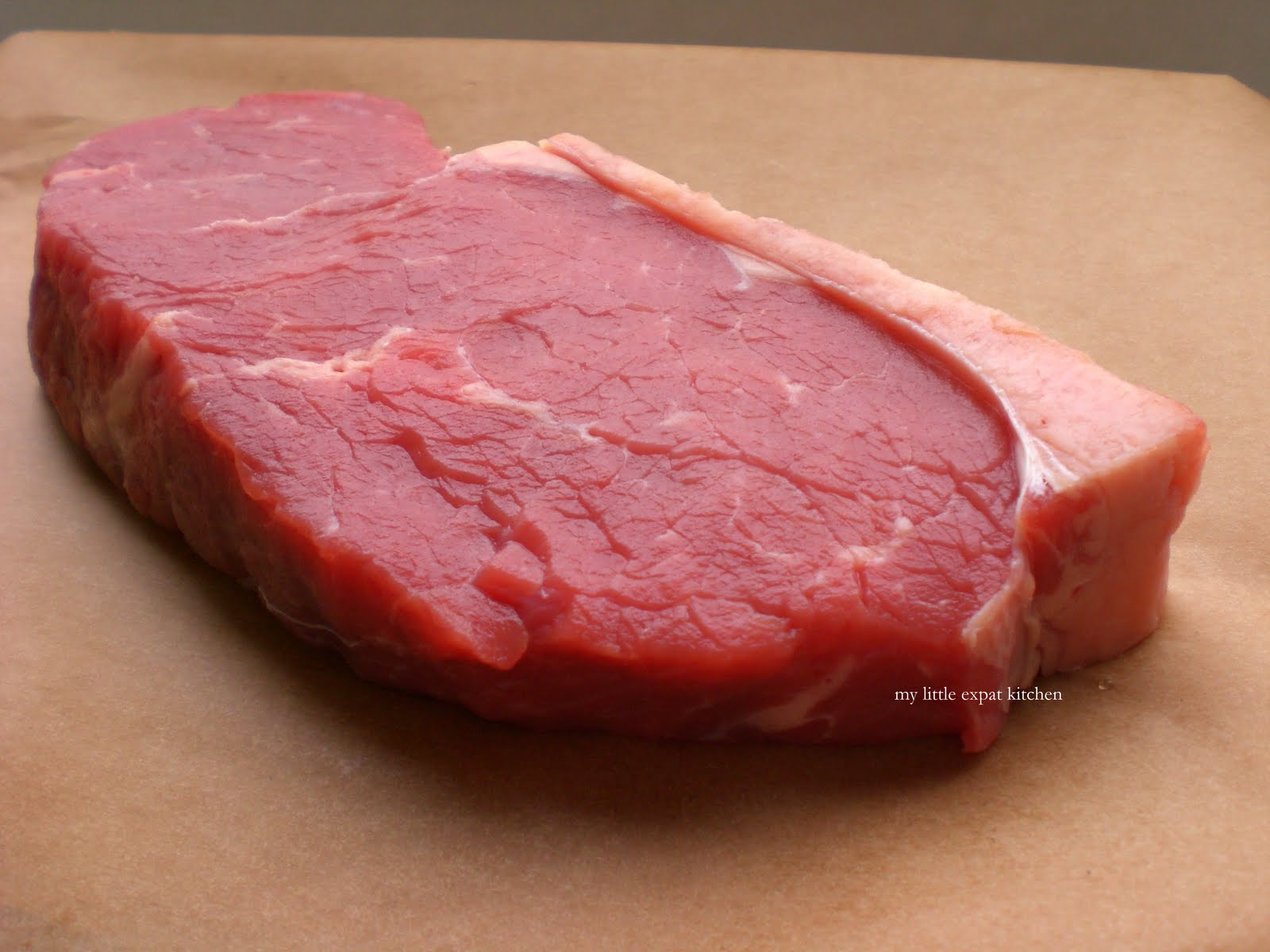
Ah, the meat. The cut of meat I chose was entrecôte, a very popular steak in The Netherlands as well as in Greece. It's a premium cut and utterly delicious and since I'm very particular when it comes to red meat—I don't like a lot of fat on it, I hate it when it's tough and sinewy, etc.—it is ideal for my taste.


I also believe that if you choose pour quality meat to put in such a beautifully simple sandwich then the whole thing is ruined. An inferior cut has nowhere to hide here. There are no rich sauces, no fried onions, no fatty cheese to disguise it. There are only rosemary leaves, lemon juice and virgin olive oil that dress the steak and add a great depth of flavor.


As far as bread goes, ciabatta is number one in my book as a choice for a good sandwich. Not too much crumb, wide enough for the filling to spread around nicely and once heated in the oven just until it becomes a little crunchy around the edges but still soft, there's just nothing like it.


Grilled meat juices trickled down my hand and all the way to my elbow as soon as I bit into the sandwich. Mustard dripped all over my chin, falling straight onto my t-shirt. No napkins, no plates.
I'm usually not this messy when I eat. This sandwich brings out the worst in me. Or perhaps, the best.


Entrecôte Steak Sandwich with Dijon Mustard and Rocket Leaves
Inspired by Jamie Oliver

Cutting a thick steak in half lengthwise and then pounding it with a mallet, reduces the grilling time and also makes a steak that's not one of the cheapest of its kind go a long way. You can also use sirloin steak instead of entrecôte, or even rump steak.

You can use a grill or griddle to cook the steak but you can also use a regular skillet (preferably heavy-bottomed)*. The directions for cooking the meat are the same as when you cook it on the grill.

In my previous post, I asked you about your favorite kind of mustard and both here and on the Greek page of my blog, I discovered through your comments some very interesting varieties. So many mustards for me to try. Thank you for all your suggestions! I hope my fridge can handle it.
I have to admit that my all time favorite is Dijon and that's why I'm using it here. Feel free to add your own favorite mustard but make sure it is a strong one; the steak needs it.


Yield: 3 large sandwiches

Ingredients
1 thick, large, boneless entrecôte steak (mine was 280 g with a 2 cm thickness) or sirloin steak or rump boneless beef steak
The leaves from 1 rosemary sprig
1 Tbsp plus 1 tsp virgin olive oil (plus 1 Tbsp for the oiling of the grill/skillet)
1 ½ tsp freshly squeezed lemon juice
2 Tbsp Dijon mustard
Salt
Freshly ground black pepper
70 g baby or wild rocket leaves
1 large ciabatta

Special equipment: a grill or griddle (this is the one I use), kitchen mallet


Preparation
Take the steak out of the refrigerator at least 15 minutes before grilling in order to allow it to come to room temperature. Trim most of the fat off the steak and with a big, sharp knife cut it in half lengthwise. Place steaks over a large sheet of plastic wrap, sprinkle them with salt and pepper and add the rosemary leaves on top. Cover them with another large sheet of plastic wrap and, using a mallet, pound them until they become half in thickness. Be careful not to tear them apart or pound them too thin.
Remove the plastic wrap, place steaks on a plate and rub them with 1 Tbsp of olive oil.

Place ciabatta in a preheated oven (about 200 degrees Celsius) for 4-6 minutes until it becomes slightly crispy around the edges.

Rinse the rocket leaves under running water and strain them in a colander.


Oil your grill or griddle with 1 Tbsp of olive oil and heat over high heat. Once it gets very hot (in order to check, you can pour a few drops of water on the grill and if they sizzle it is ready) add the steaks and grill them for 2 minutes on one side and 1 minute on the other. Be careful not to overcook them otherwise they'll become rubbery and lose all their flavor and juices. The cooking time depends of course on your own personal taste.

Remove the steaks from the grill and put them on a plate. Drizzle 1 tsp of olive oil over them and 1 ½ tsp of freshly squeezed lemon juice. Let them rest for 2-3 minutes.

Cut the ciabatta in half lengthwise and spread the Dijon mustard on one piece of the bread. Add the rocket leaves and place the steaks on top. Pour the juices that have accumulated on the plate you rested the steaks on, on top of the steaks. These juices are extremely flavorful. Don't make the mistake of throwing them out!

Cut the ciabatta into three large pieces and enjoy your steak sandwiches!


*If you don't have a grill or griddle and want to cook the steaks in a skillet, you need to pour 1 Tbsp of olive oil into it and heat over high heat. Once the oil starts to shimmer, add the steaks and cook according to the above instructions.